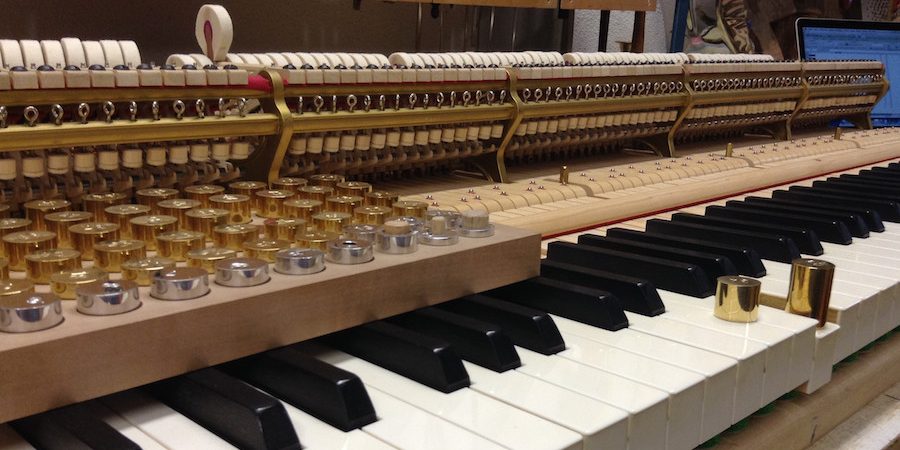
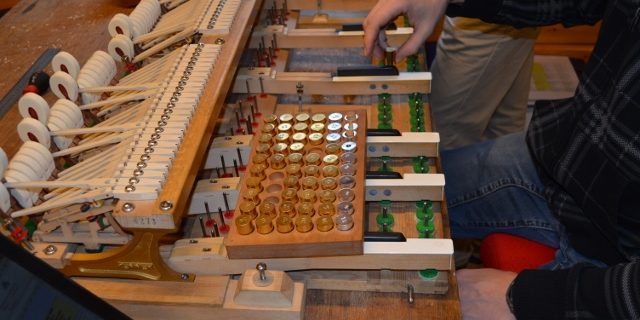
Precision Touch Design (PTD) is a collection of techniques that gives an insight view of how a grand piano action performs.
With the use of PTD it is possible to analyze and improve the touch and tone of a grand piano.
In what cases would PTD be useful?
-
With the replacement of hammerheads;
-
When the touch of a grand piano is too light or too heavy;
-
When the tone can be improved by changing the weight of the hammerheads;
-
To create a more even touch.
The options of a Precision Touch Design:
-
A quick analysis of how a grand piano action works by measuring friction and weight related issues.
-
The average weight of the hammersheads and the action transmittance ratio can be fine-tuned.
-
The touch can be improved by calibrating the weight of the hammers and the lead weights in the keys.
-
The tone can be improved by changing the weight of the hammers. Every bad performing action can be transformed into an instrument of art.
The inventor:
David Stanwood has invented the PTD method. Since the nineties PTD is well known in the USA. Check out the internet site of Stanwood: www.stanwoodpiano.com
How does it work?
For installation of a PTD one needs to go through the following steps:
-
Analyses of the action by measuring up- and down weight and weighing action components like the hammer, wippen and key. Their correlations will be calculated.
-
Choosing a certain hammer weight and calibrating the hammer weight accordingly.
-
Match the leverage ratio to the calibrated hammer weight.
-
Calculate the key leading in combination with weight measurements of action components and change the key lead weights accordingly.
-
These activities are usually integrated in daily practice of action rebuilding work when hammerheads need to be replaced and key leading needs to be adapted.
Please have a look at the Course summary of the PTD Academy Europe.
Powered by Maakum Websites